
How to Choose the Right Portable Power Station for Emergencies
Learn how to calculate your wattage needs, compare battery types, and choose the best portable power station for home backup or camping without overpaying.
Quick answer A portable power station is a large battery box that runs your electronics when the power goes out. To pick the right model, match your appliances to the unit's watt-hours for runtime and its inverter size for power output.
Sudden blackouts leave you without lights, internet, or a way to keep your food cold. A reliable backup battery gives you peace of mind during storms or grid failures.
Choosing the right unit can feel confusing with so many technical specs on the market. This portable power station buying guide cuts through the marketing terms to help you find a safe and useful model.
Key takeaways
- Watt-hours tell you how long a battery will last, while running watts tell you what size appliance it can start.
- Lithium Iron Phosphate (LiFePO4) batteries last for thousands of cycles and are safer than older NMC chemistries.
- Refrigerators require units with high surge limits and at least 1,000Wh of capacity.
- Always check if your AC outlet power is shared across ports rather than delivered independently.
Understanding Watt-Hours and Running Watts
You must understand two main numbers when shopping for a power station: watt-hours and running watts. These terms measure very different things. Mixing them up leads to buying a unit that shuts down immediately.
Watt-hours measure total capacity. Think of this as the size of your fuel tank. An entry-level model like the UDPOWER C400 offers 256Wh. Mid-range units provide around 1,000Wh. Large home backup systems exceed 3,000Wh.
Running watts measure power output. Think of this as the size of your engine. A 500W inverter can only run devices that draw up to 500 watts at one time. If you plug in a coffee maker that uses 1,200 watts, a small inverter will trip its safety switch.
Many appliances also have a surge rating. A refrigerator compressor might use 200 watts while running, but it needs 1,200 watts for a split second to start up. Your power station must handle that surge wattage or the appliance will fail to turn on.
LiFePO4 vs. NMC: Which Battery Chemistry Is Better?
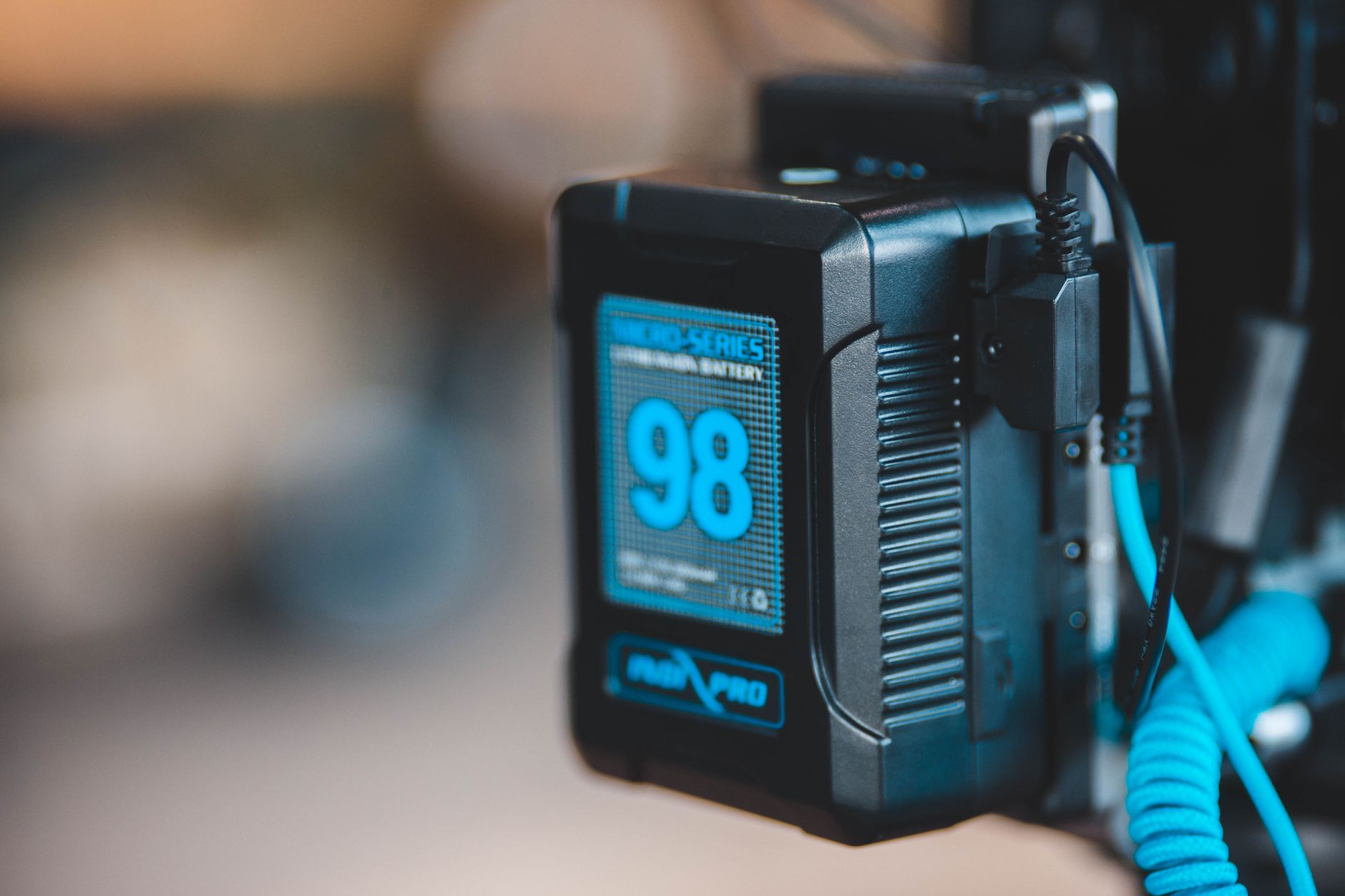
Photo by Erik Mclean on Pexels
Battery chemistry dictates how long your power station will last over the years. Older models used Nickel Manganese Cobalt (NMC) chemistries. Most current power stations use Lithium Iron Phosphate (LiFePO4).
LiFePO4 batteries offer a massive lifespan advantage. They often survive 3,000 or more charge cycles before losing significant capacity. NMC batteries usually degrade much faster after 500 cycles.
LiFePO4 cells are also much safer under high heat or physical stress. They resist thermal runaway better than older lithium designs. This makes them ideal to keep inside a home for emergency backup.
Solid-state options, such as the Yoshino Power B4000 SST, are also entering the market. These use solid electrolytes instead of liquid ones. They offer high energy density in a smaller frame, though they usually cost more.
Assessing Your Essential Devices and Backup Needs
Before you spend money, make a list of what you actually need to run during a blackout. Do not try to power your entire house unless you buy an expensive, heavy home integration system.
A basic kit for phones, Wi-Fi routers, and LED lamps only needs a small unit under 500Wh. Keeping a fridge running requires a mid-tier model with at least a 1,000W to 2,000W inverter and roughly 1,000Wh to 1,500Wh of capacity.
| Use Case | Recommended Capacity | Inverter Size | Example Models |
|---|---|---|---|
| Camping & Devices | 200Wh - 500Wh | 300W - 500W | UDPOWER C400 |
| Emergency Fridge Backup | 1,000Wh - 1,500Wh | 1,500W - 2,000W | Jackery Explorer 1000 V2, Anker Solix C1000 V2 |
| Full Home Backup | 3,000Wh+ (Expandable) | 2,000W - 3,000W+ | EcoFlow Delta Pro 3, Bluetti AC200Max |
Check the label on the back of your appliances to find their exact watt usage. Add those numbers together to see your total load.
Solar Panel Compatibility and Charging Speeds
When the power grid goes down for days, wall outlets will not help you recharge. You need alternative ways to fill your battery.
Most modern units support multi-way charging. You can plug them into a standard wall outlet, a car DC socket, a gas generator, or portable solar panels. Fast-charging models can go from zero to full in about one hour using a wall plug.
Solar charging speeds depend on panel wattage and weather. A 200W solar panel takes much longer to fill a 1,000Wh battery than a 400W array. Check the maximum solar input wattage listed in the manual before buying extra panels.
Tip: Test your solar setup on a sunny day before an emergency happens. Do not wait for a storm to figure out connector types and panel placement.
Portability, Weight, and Build Quality Factors
Weight scales directly with battery capacity. You need to decide how mobile your power station must be.
Lightweight units weigh under 15 pounds. The UDPOWER C400 weighs just under 7 pounds, making it easy to toss in a car trunk for weekend camping trips.
Mid-tier emergency units weigh between 40 and 65 pounds. The Bluetti AC200Max sits around 62 pounds. These have sturdy handles and fit in a closet, but carrying them long distances is tiring.
Heavy-duty home backups can weigh 135 pounds or more. These units usually feature built-in wheels and pull handles so you can roll them across flat floors.
Safety Features and Output Ports to Look For
A good power station protects itself and your gear from electrical faults. Look for models with built-in surge protection, short-circuit prevention, and temperature controls.
Check the port selection carefully. A home backup unit should have at least four AC wall outlets. Make sure it also includes USB-A ports, fast-charging 100W USB-C ports, and a 12V cigarette lighter socket for car accessories.
A clear digital display helps a lot. It should show your remaining battery percentage, input wattage, output wattage, and estimated runtime down to the minute.
Pros
- Silent operation with zero gas fumes
- Safe to use indoors during storms
- Low maintenance compared to gas generators
- Rechargeable via clean solar energy
cons
- High initial purchase cost
- Heavy weight on large capacity models
- Shared AC output limits total power per port
Common Mistakes to Avoid
Many buyers make avoidable errors when picking a power station. Keep these pitfalls in mind.
Do not assume every individual AC outlet can output the station's full maximum wattage at the same time. Most units share their total inverter rating across all active AC ports.
Do not assume a standard 120V portable power station can power heavy 240V household equipment like large central air conditioners or electric ovens. Those require specialized heavy-duty systems.
Do not buy a unit solely based on massive capacity while ignoring inverter limits. A huge battery with a weak inverter will still fail to start your refrigerator compressor.
Warning: Never run a gas generator inside your home, but do test your battery power station indoors well before an emergency strikes.
Bottom line If you live in an area prone to short power blips, a mid-tier unit like the Jackery Explorer 1000 V2 provides the best balance of price and fridge-saving capacity. Skip heavy rolling units if you only need camping gear, and skip tiny entry-level boxes if you need reliable storm backup.
FAQ
How many watt-hours do I need to run a refrigerator during a power outage?
You typically need a unit with 1,000Wh to 1,500Wh of capacity and a 1,500W inverter to keep a standard kitchen refrigerator running for roughly 12 to 24 hours, depending on how often the compressor kicks on.
What is the difference between LiFePO4 and lithium-ion batteries?
LiFePO4 is a specific type of lithium battery that lasts significantly longer, often exceeding 3,000 charge cycles, and offers better thermal safety than older NMC lithium-ion chemistries.
Can I charge a portable power station with solar panels?
Yes. Most modern power stations accept DC input from portable solar panels, allowing you to recharge your battery off-grid during extended blackouts.
How long do portable power stations last before degrading?
Quality LiFePO4 power stations maintain most of their original battery capacity after 3,000 cycles, translating to a decade or more of regular use if cared for properly.
What size power station do I need for camping?
For weekend car camping to charge phones, cameras, and LED lights, a compact 256Wh to 500Wh model provides plenty of power without weighing down your vehicle.
Sources
Facts in this article were checked against these pages on October 7, 2026:
- How do I choose a portable power station? (oupes.com)
- Best (and Worst) Portable Power Stations | Practical Self Reliance (ashleyadamant.substack.com)
- Portable Power Station Buying Guide: How to Choose One (2026) – UDPOWER (udpwr.com)
- Portable Power Station: Power at Your Fingertips for Laptop, Camping, Tailgating, and Emergency Situations-Blog (alphaess.com)
- How To Choose The RIGHT Portable Power Station for YOU! (youtube.com)
- How To Choose The RIGHT Portable Power Station For YOU (Beginner's Guide) (youtube.com)
How we researched this: this guide is based on current manufacturer information and reputable sources, listed in the Sources section above, and is updated when things change. Read our editorial policy.
Content Writter
Comments
No comments yet — be the first to share your thoughts.