
Meta Quest 3 vs. Quest 3S: Which Should You Buy?
Torn between the budget Quest 3S and flagship Quest 3? We compare display clarity, optics, comfort, and real-world value to help you choose.
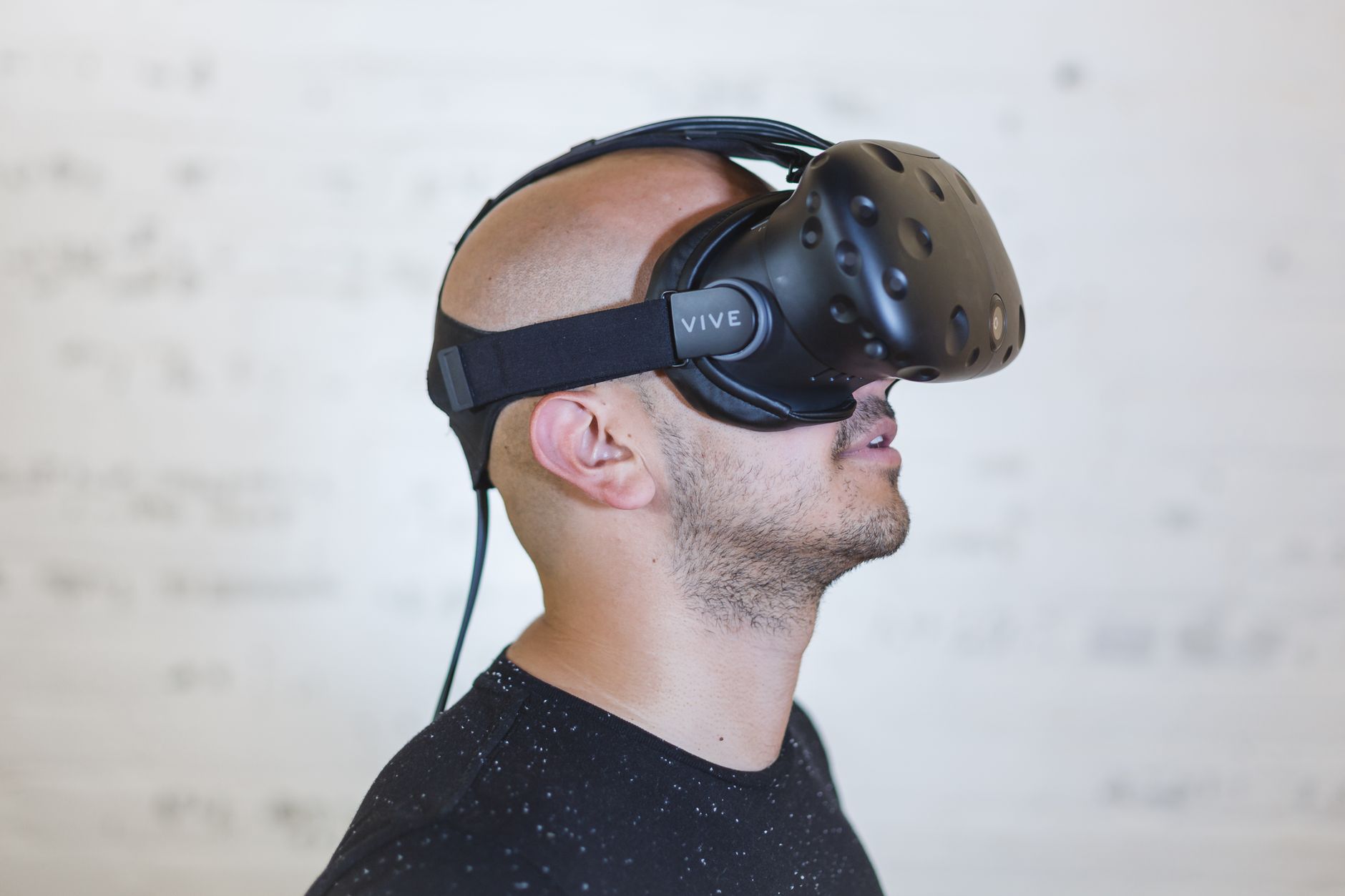
Quick answer Buy the Meta Quest 3S if you want affordable access to modern standalone VR gaming without sacrificing core performance. Spend the extra $250 on the Meta Quest 3 if you prioritize edge-to-edge optical clarity, sharper text for productivity, precise interpupillary distance (IPD) adjustments, and better mixed reality passthrough.
Meta's current standalone VR lineup centers around two main devices: the flagship Quest 3 and the entry-level Quest 3S. With the older Quest 2 officially retired, buyers looking to enter Meta's ecosystem must decide between these two headsets, which share identical internal processing hardware but differ sharply in optical quality and physical features.
A recent price adjustment driven by chip market shifts raised retail costs across both models, widening the gap between them to $250. Understanding where Meta cut corners on the Quest 3S—and where it kept premium features intact—is key to choosing the right headset for your needs.
Key takeaways
- Both headsets use the Snapdragon XR2 Gen 2 chip with 8GB RAM, playing identical games at identical performance levels.
- The Quest 3 uses pancake lenses and higher-resolution panels (2064 x 2208 per eye) for sharp visuals right to the edges.
- The Quest 3S uses older Fresnel lenses (1832 x 1920 per eye) with a smaller central sweet spot and 3-step physical IPD adjustments.
- Hardware omissions on the Quest 3S include the 3.5mm headphone jack, continuous IPD wheel, hardware eye-relief depth slider, and dedicated depth sensor.
Price and Specs: What You Get for $250 More
As of 2026, retail pricing for Meta's headset lineup reflects market-wide memory chip increases. The Quest 3S starts at $349.99 for the 128GB tier and $449.99 for 256GB. The Quest 3 is sold exclusively in a 512GB configuration for $599.99. This creates a $250 base price gap between the two devices.
| Feature | Meta Quest 3S | Meta Quest 3 |
|---|---|---|
| Base Price | $349.99 (128GB) | $599.99 (512GB) |
| Storage Options | 128GB / 256GB | 512GB |
| Processor | Snapdragon XR2 Gen 2 | Snapdragon XR2 Gen 2 |
| RAM | 8GB | 8GB |
| Lens Type | Fresnel | Pancake |
| Resolution (Per Eye) | 1832 x 1920 | 2064 x 2208 |
| Field of View | ~96° horizontal / ~90° vertical | ~110° horizontal |
| IPD Adjustment | 3-step preset (58, 63, 68 mm) | Continuous smooth wheel |
| 3.5mm Headphone Jack | No | Yes |
| Depth Sensor | No | Yes |
Meta Quest 3S
Pros
- Lower entry price for modern VR gaming
- Identical processor and RAM as the flagship model
- Supports full Horizon OS library and PC VR streaming
- Includes 2nd-gen Touch Plus ringless controllers
Cons
- Fresnel lenses create glaring "god rays" and blur outside the center
- Fixed 3-step IPD fit can cause eye strain for off-step pupil widths
- Lacks a 3.5mm headphone jack for standard wired audio
Meta Quest 3
Pros
- Pancake optics offer edge-to-edge visual clarity
- Higher panel resolution and wider 110-degree field of view
- Continuous wheel adjustment for exact eye alignment
- Dedicated depth sensor improves mixed reality room mapping
Cons
- Higher entry price at $599.99
- No lower-tier storage options available
Lenses and Displays: Pancake vs. Fresnel Real-World Differences
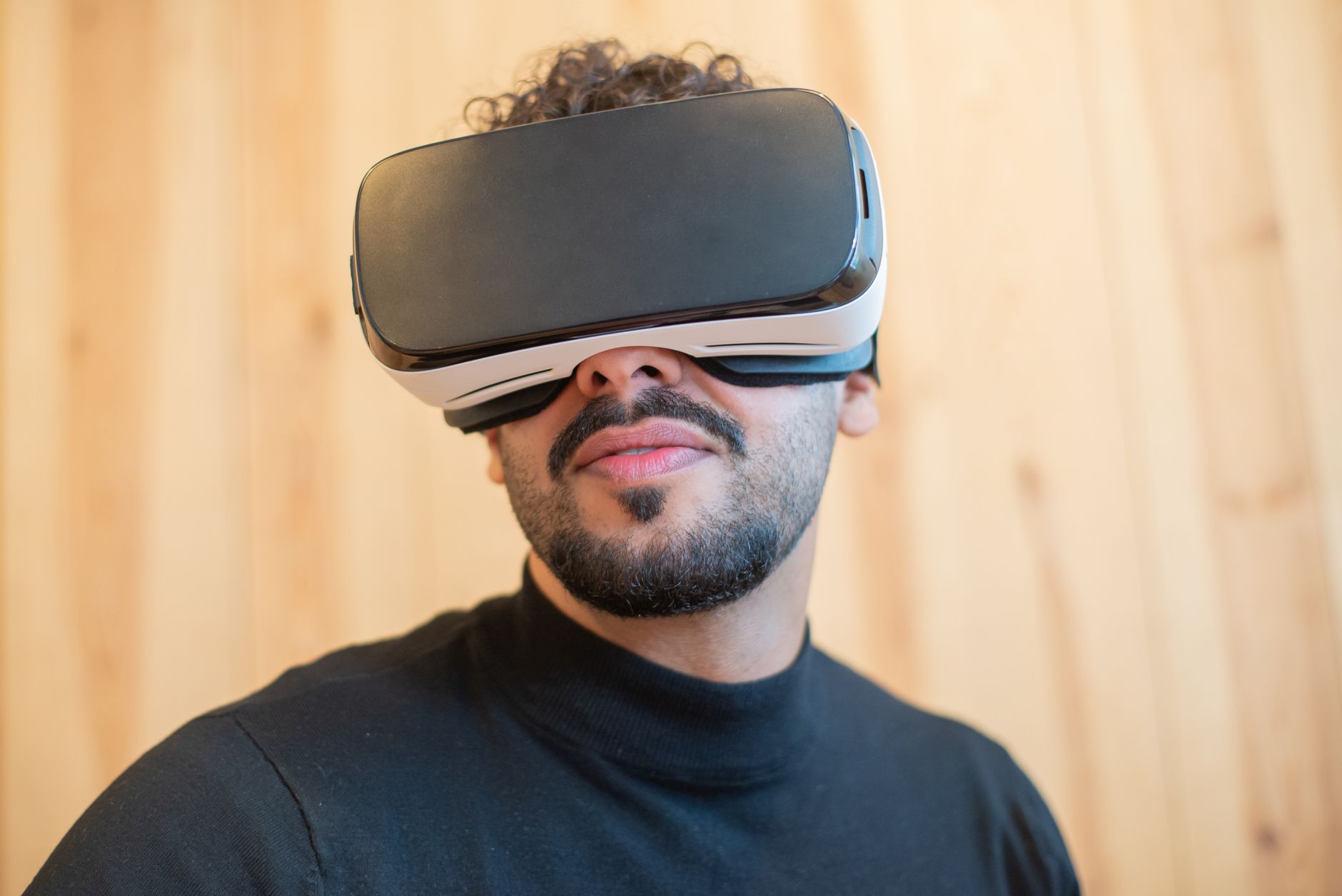
Photo by Kampus Production on Pexels
The single biggest difference when wearing these headsets comes down to lens architecture. The flagship Quest 3 uses pancake lenses, which fold light through thin optical layers. The budget Quest 3S relies on older, thicker Fresnel lenses featuring concentric ridges.
In practical use, pancake optics keep the entire image clear regardless of where your eyes look. You can read small text, check user interface elements in your peripheral vision, and scan virtual environments without moving your entire head. The Quest 3 also provides a 2064 x 2208 per-eye resolution paired with a wide 110-degree field of view.
Fresnel lenses on the Quest 3S feature a limited central "sweet spot." Looking slightly off-center causes noticeable blur, and high-contrast scenes (such as white logos on black backgrounds) suffer from visual glare known as "god rays." The panel resolution on the Quest 3S drops to 1832 x 1920 per eye, with a narrower field of view measuring roughly 96 degrees horizontally.
Tip: If you plan to read documents, browse web pages, or mirror PC screens inside virtual desktop apps, the pancake lenses on the Quest 3 offer vastly superior text clarity compared to the Quest 3S.
Performance and Passthrough: Where They Are Identical
Despite their price gap, both devices deliver matching system performance. Meta equipped both the Quest 3 and Quest 3S with the Qualcomm Snapdragon XR2 Gen 2 chipset and 8GB of system memory. They ship with identical ringless 2nd-gen Touch Plus motion controllers.
Because the core hardware is uniform, both headsets access the exact same software catalog on Meta Horizon OS. High-end standalone titles render with matching texture quality, frame rates, and lighting features on both headsets. Both models also connect to desktop PCs for PC VR play through Meta Link software, Air Link, or third-party streaming tools.
Mixed reality color passthrough is functional on both headsets, but image quality differs. The flagship Quest 3 incorporates a central hardware depth sensor alongside dual color cameras, providing sharp, spatially accurate overlays of your physical room. The Quest 3S lacks a depth sensor, generating spatial boundaries through camera algorithms alone. While functional, passthrough on the Quest 3S appears grainier with slightly skewed proportions when looking at close-up physical objects.
Design, Weight, and Physical Features Compared
Physical features reveal where production costs were cut on the budget model. The Quest 3 includes a 3.5mm headphone jack on its side strap connector, allowing low-latency wired audio without extra adapters. The Quest 3S removes the 3.5mm audio port entirely, forcing users to rely on built-in speakers, USB-C headphones, or low-latency wireless transmitters.
Physical eye relief is another key difference. The Meta Quest 3 has built-in facial interface latches that extend the headset interior to make room for eyeglasses. The Quest 3S omits this built-in adjustment, requiring users to install a removable plastic frame spacer instead.
Interpupillary distance (IPD)—the space between your pupils—is critical for comfortable VR viewing. The Quest 3 uses a smooth mechanical wheel underneath the visor for continuous IPD adjustment between 58mm and 70mm. The Quest 3S uses a 3-step physical click mechanism limited to 58mm, 63mm, and 68mm settings.
Common Mistakes to Avoid
When selecting between these headsets, prospective buyers frequently make a few avoidable errors:
- Assuming the Quest 3 runs games better: Both headsets use identical internal processors and memory. Frame rates and graphical detail settings are same across both devices.
- Ignoring pupil distance alignment: If your natural IPD falls between the fixed settings on the Quest 3S (such as 60mm or 66mm), you may experience persistent optical blur or eye strain because you cannot fine-tune the lens distance.
- Expecting wired audio out of the box on Quest 3S: Gamers who prefer using traditional 3.5mm gaming headsets will need a USB-C adapter or dedicated wireless audio gear on the Quest 3S.
Who Should Spend Extra on Quest 3?
The extra $250 investment for the Meta Quest 3 pays off for specific usage habits. Choose the Quest 3 if:
- You play games or consume media for extended hours where edge-to-edge optical clarity reduces eye fatigue.
- Your IPD falls outside standard mechanical increments, requiring precise lens alignment to avoid headaches.
- You frequently use virtual desktop displays or write code inside VR, where clear text rendering is mandatory.
- You want native 3.5mm headphone compatibility without occupying the USB-C charging port.
Conversely, the Quest 3S is ideal for budget-conscious gamers, newcomers trying VR for the first time, active workout enthusiasts, or families buying multiple units for multiplayer gaming. If you just want to play action games like Beat Saber or Superhot, visual sweet spots matter far less than raw motion control performance.
For readers building out a broader connected tech ecosystem alongside VR, check out our guide on How to Build a Smart Home Automation System That Actually Works.
Bottom line Choose the Meta Quest 3S if you want the most cost-effective entry into current-generation VR gaming and do not mind Fresnel lens glare or fixed IPD steps. Choose the Meta Quest 3 if you want top-tier optical sharpness, fine-tuned pupil adjustment, clear text readability, and built-in headphone support.
FAQ
Do Meta Quest 3 and Quest 3S play the exact same games?
Yes. Both headsets feature the same Snapdragon XR2 Gen 2 processor and 8GB RAM. Every game and application built for Meta Horizon OS runs identically on both devices without missing features or performance penalties.
Is the visual difference between pancake and Fresnel lenses noticeable?
Yes, the difference is immediate. Pancake lenses on the Quest 3 provide sharp visual clarity across your entire view. Fresnel lenses on the Quest 3S have a smaller central sweet spot, causing peripheral elements to look blurry unless you turn your head directly toward them.
Can I use Meta Quest 2 accessories on the Quest 3S?
Some accessories carry over while others do not. Controllers are different, but select third-party head straps and facial interfaces designed for the Quest 2 may work on the Quest 3S due to its similar front housing shape. Always check manufacturer compatibility before purchasing accessories.
Is Meta Quest 3S comfortable for long gaming sessions?
Comfort depends largely on how well your eyes align with the 3-step physical IPD adjustments. If your eye width closely matches 58mm, 63mm, or 68mm, the headset feels fine. If your IPD falls between those steps, off-axis viewing can cause eye strain during longer sessions.
Which headset has better battery life out of the box?
Both headsets offer roughly 2 to 2.5 hours of active runtime depending on screen brightness, wireless streaming, and processor load. System power management keeps battery performance comparable across both models under normal gaming conditions.
Sources
Facts in this article were checked against these pages on October 10, 2026:
- Quest 3 vs Quest 3S: $599 vs $349, 30% Sharper [2026] (shattered.io)
- Quest 3 vs Quest 3S: Which Meta Quest Should You Buy in 2026? | VR.org (vr.org)
- Meta Quest 3 vs. Meta Quest 3S: Which One Is Right for You? (vice.com)
- Meta Quest 3S vs. Quest 3 - Which Should You Buy? (youtube.com)
- Meta Quest 3 vs. Meta Quest 3S: Save Your Money or Upgrade Now? | PCMag (pcmag.com)
- Quest 3S vs Quest 3 2026: $299 vs $499 [Tested] (tech-insider.org)
How we researched this: this guide is based on current manufacturer information and reputable sources, listed in the Sources section above, and is updated when things change. Read our editorial policy.
Content Writter

Comments
No comments yet — be the first to share your thoughts.