
Ultra-Wideband (UWB) Explained: What It Does and Where to Use It
Ultra-Wideband brings pinpoint spatial tracking to phones, cars, and smart locks. Learn how UWB works, how it beats Bluetooth, and which devices support it.
Quick answer: Ultra-Wideband (UWB) is a short-range radio protocol that measures the exact time radio pulses take to bounce between devices. It delivers spatial accuracy down to a few inches, making digital car keys, smart door locks, and item finding far more precise and secure than Bluetooth.
You have likely used Bluetooth to pair headphones or track down lost keys with a smart tag. While Bluetooth works well for sending audio or spotting a missing bag across the room, it struggles to tell you the exact distance or direction. You often end up wandering around waiting for a signal meter to rise.
Ultra-Wideband solves this limitation. In this guide to Ultra-Wideband UWB explained, you will see how tiny radio pulses turn your phone into a digital tape measure and a theft-proof digital key.
Key takeaways
- UWB uses wide radio frequencies (3.1 GHz to 10.6 GHz) and Time-of-Flight math to track objects within 4 to 12 inches (10 to 30 cm).
- Unlike standard Bluetooth, which guesses distance using signal loudness, UWB ignores bouncing signal reflections and measures real travel time.
- Digital car keys rely on UWB because its precise timing blocks relay attacks from vehicle thieves.
- UWB chips are mainly found in flagship smartphones, select trackers, and modern smart locks.
What Is Ultra-Wideband (UWB) Technology?
Ultra-Wideband is a low-power, short-range radio technology that broadcasts pulses across a broad swath of radio frequencies. A signal counts as ultra-wideband if it uses at least 500 MHz of bandwidth at once. Most consumer setups operate between 3.1 GHz and 10.6 GHz, with modern consumer gadgets heavily focused on the 6 GHz to 8 GHz channels.
Think of traditional radio communications, like FM radio or older Bluetooth, as a continuous tone played through a narrow straw. In contrast, UWB works like quick taps on a wide drum. It sends billions of short radio pulses every single second across a huge frequency range.
To pinpoint position, UWB relies on Time-of-Flight (ToF). The transmitting device sends a tiny pulse stamped with an exact time code. The receiving tag sends an answer right back. By calculating how many nanoseconds the trip took and multiplying that time by the speed of light, the devices calculate the physical distance between them.
By adding Angle of Arrival (AoA) processing across multiple tiny antennas, your phone can also tell which way the tag is sitting. That is why your screen can show a directional arrow pointing straight toward your lost keys on a couch cushion.
How UWB Differs From Bluetooth and Wi-Fi
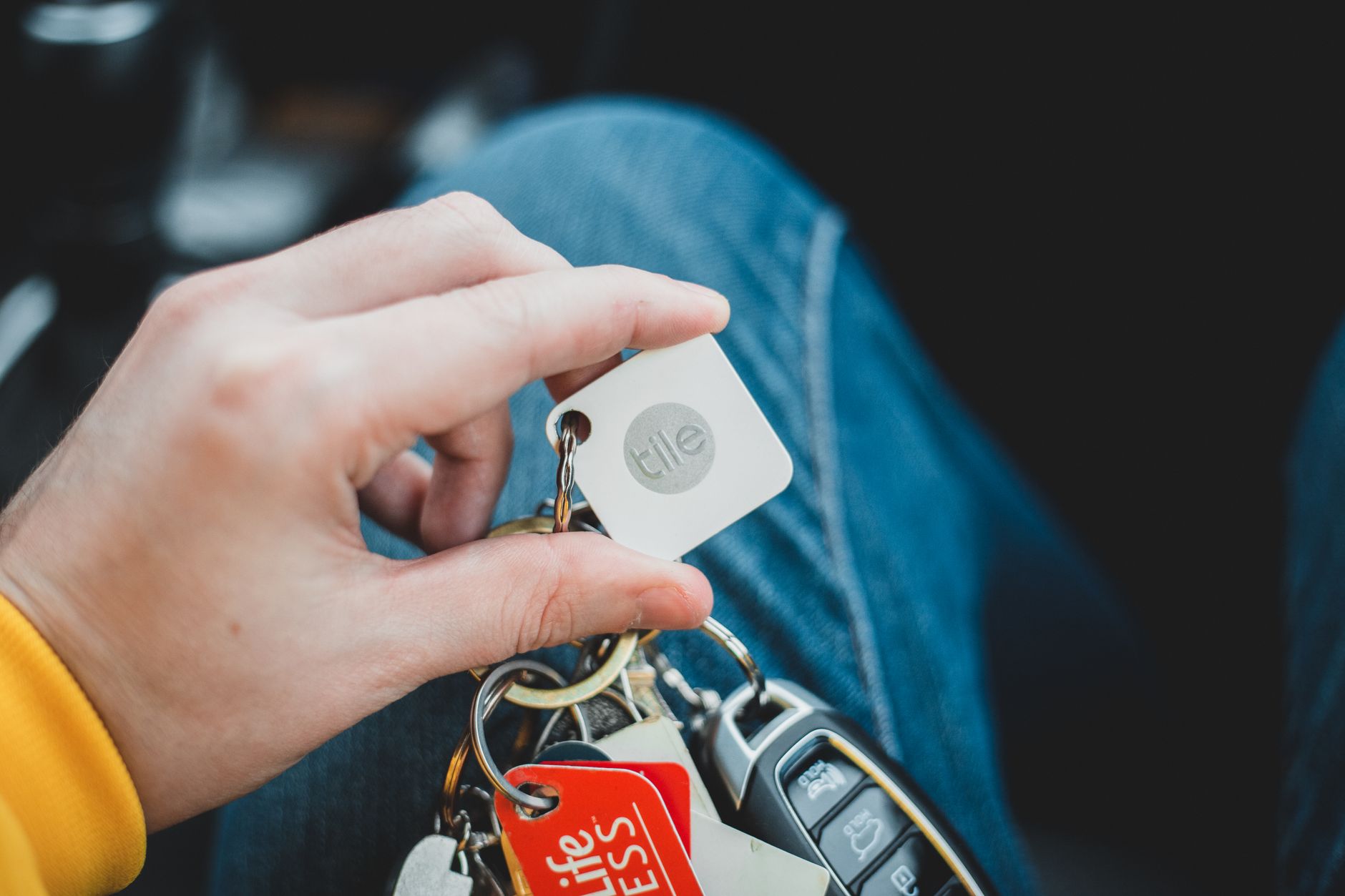
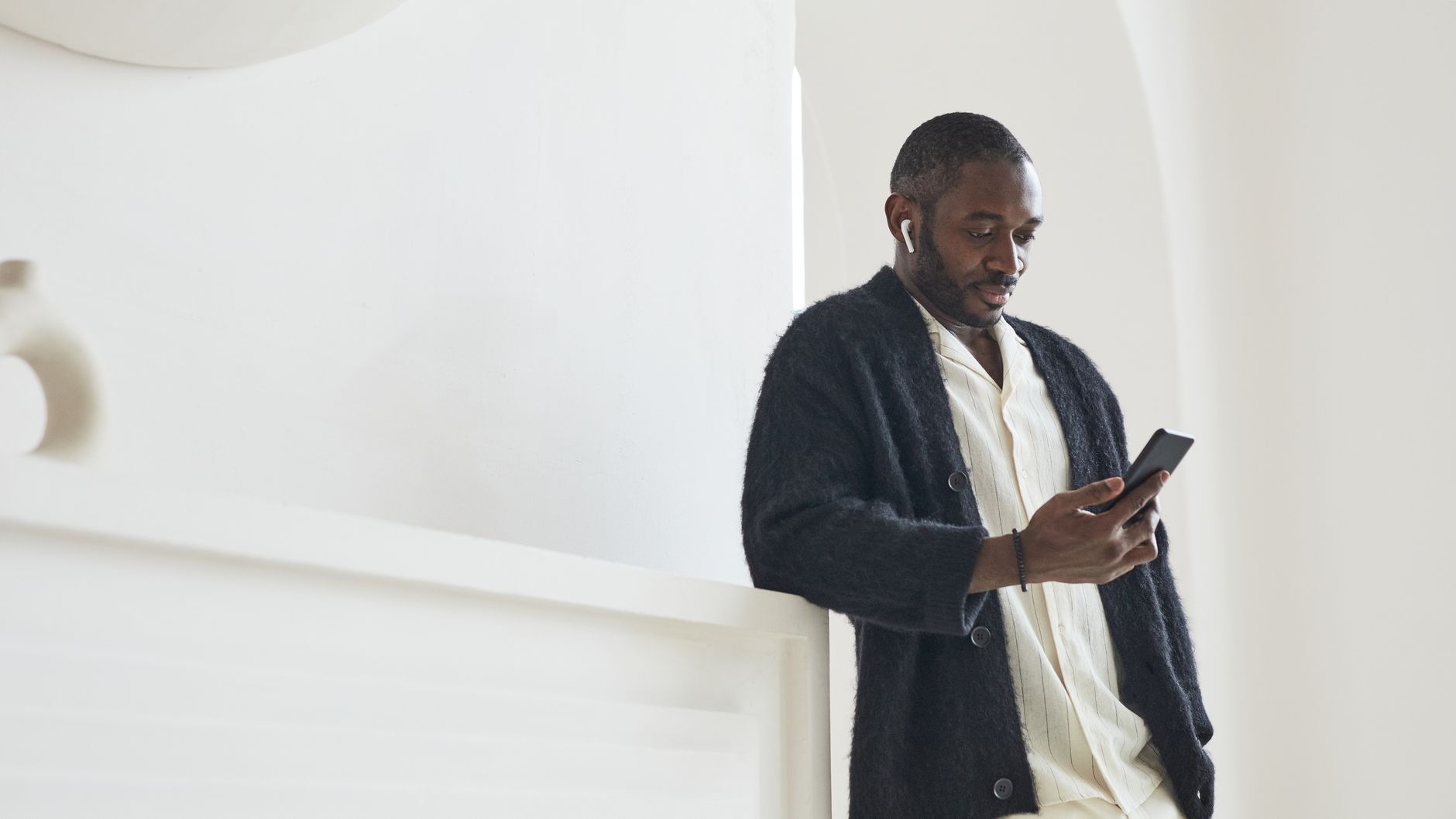
Photo by Erik Mclean on Pexels
Standard Wi-Fi and classic Bluetooth rely on Received Signal Strength Indication (RSSI). RSSI estimates distance by measuring how strong or faint the radio wave feels when it arrives. If the signal is loud, the device assumes you are close. If the signal is quiet, it assumes you are far away.
This approach has a major flaw called multipath interference. Radio waves bounce off concrete walls, metallic appliances, desks, and floors. A bouncing wave can make an RSSI tracker believe your keys are twenty feet away behind a wall when they are sitting on the kitchen counter right beside you.
Because UWB pulses are so short and sharp, the receiver can separate the straight, direct pulse from the delayed echoes bouncing off the walls. This feature, called multipath mitigation, lets UWB deliver reliable distance readings even in cluttered rooms.
| Feature | Ultra-Wideband (UWB) | Bluetooth Low Energy (BLE) | Wi-Fi |
|---|---|---|---|
| Distance Metric | Time-of-Flight (ToF) | Signal strength (RSSI) | Signal strength (RSSI) |
| Location Accuracy | 4 to 12 inches (10 to 30 cm) | 3 to 15 feet (1 to 5 meters) | 10 to 30 feet (3 to 10 meters) |
| Bandwidth | Over 500 MHz | 1 to 2 MHz | 20 to 160 MHz |
| Typical Range | 10 to 30 meters line-of-sight | 10 to 100 meters | 30 to 100 meters |
| Relay Attack Risk | Extremely low | Moderate to high | High |
Bluetooth is still king for continuous data streams like playing wireless music via Auracast Bluetooth Audio. However, for spatial awareness, UWB is far more accurate.
Pros
- Centimeter-level physical location accuracy.
- Ignores radio reflections from metal and walls.
- Stops radio relay spoofing for car keys and doors.
- Consumes very low power during active pings.
Cons
- Limited range compared to long-distance Wi-Fi.
- Requires dedicated hardware chips inside both devices.
- Still absent from most budget and mid-range phones.
Everyday Uses: Item Tracking, Digital Car Keys, and Smart Home Access
While early UWB systems were built for factory logistics, the technology is now common in daily consumer devices.
- Precision Item Finding: When you search for compatible smart trackers, your phone screen brings up a compass-style compass graphic that guides you straight to the cushion or drawer hiding your item.
- Hands-Free Digital Car Keys: Major automakers use UWB to replace physical key fobs. The car knows if your phone is in your pocket, outside the driver door, or resting in the back seat. The vehicle only unlocks when you stand right next to the handle, and the engine starts only when the phone is inside the cabin.
- Smart Home Locks: Connected deadbolts use UWB to spot you walking up the front porch path. Instead of fumbling with keypads or waiting for sluggish geofencing apps, the door unlocks right as you grab the handle.
- Smart Presence Automation: Rather than putting cameras in private rooms, home setups use low-power UWB sensors to detect human micro-movements like breathing. This helps prevent smart thermostat mistakes by keeping climate zones active only when rooms are actually occupied.
Which Phones and Devices Currently Support UWB
Not every smartphone includes a UWB chip. Because the components add cost and require precise antenna placement, manufacturers generally reserve them for top-tier flagships.
High-end smartphones began adopting UWB around 2019. Modern flagship models—such as the Samsung Galaxy S21+ and S21 Ultra, Galaxy Z Fold series, and select Apple Pro devices—include dedicated UWB silicon. However, base-model flagships and budget phones often omit the chip to save money.
Tip: If you are buying a phone specifically to use as a digital car key, check the exact spec sheet. Standard base models often skip UWB even when their larger "Plus" or "Ultra" siblings include it.
Common Mistakes With UWB Devices
- Assuming all smart trackers use UWB: Many low-cost trackers rely solely on basic Bluetooth LE. Without a UWB chip in the tag and your phone, you lose the directional arrow finding mode.
- Expecting signals through thick metal: While UWB rejects bouncing reflections better than Wi-Fi, it cannot pass through solid steel plating or heavy engine blocks.
- Leaving settings disabled: Some phones turn off UWB radios under airplane mode or battery saver profiles. If your digital key stops working, check your phone's wireless connections menu to confirm UWB is toggled on.
Privacy and Security Benefits of UWB
One of the biggest advantages of UWB is its defense against relay theft. Traditional car thieves target push-to-start vehicles using cheap radio amplifiers. One thief stands near your front door to pick up the faint key fob signal inside your house, while a partner holds an amplifier near your car door. The car thinks the key is right next to it and unlocks.
UWB stops this hack cold. Because it calculates exact physical distance using Time-of-Flight, it notices the microscopic delay introduced by the thief's relay equipment. Even if the signal code matches, the car knows the signal took too many nanoseconds to arrive, keeping the doors locked.
Warning: If you rely on digital car keys without UWB support, your vehicle may still be vulnerable to relay attacks. Look for digital keys built on modern UWB standards.
Limitations and Future Outlook for UWB
The main limitation of UWB has always been operating distance. Because it runs at strict, low transmission power to avoid interfering with other radios, reliable range is usually capped between 10 and 30 meters in open spaces.
That range limit is beginning to change. The Consumer Electronics Show (CES) put a sharp spotlight on next-generation tracking platforms. Component makers are releasing hardware like Qorvo's QM35825 chip and QPK3000 location module, designed for smaller devices and lower power draw.
At the same time, research labs like imec have demonstrated range gains using the IEEE 802.15.4ab standard. By combining narrowband radio cues with wideband timing pulses, these systems can reach distances up to 100 meters under line-of-sight conditions while pushing data rates up to 124.8 Mb/s. Regulators like the FCC are also reviewing legacy rules to give consumer UWB devices more breathing room.
Bottom line: Ultra-Wideband is worth prioritizing if you want hands-free digital car keys, smart door locks, or pinpoint item tracking. If you only use your phone for social media, streaming, and basic wireless headphones, skipping UWB on a mid-range phone will not hurt your daily routine.
Related guide: PWM Dimming Explained: Why Phone Screens Cause Eye Strain
FAQ
What is Ultra-Wideband technology?
Ultra-Wideband (UWB) is a short-range wireless radio standard that sends tiny pulses across wide frequency channels. It uses Time-of-Flight math to measure exact distances down to a few inches.
How is UWB different from Bluetooth?
Bluetooth calculates distance by measuring how loud or faint a signal sounds, which leads to errors when signals bounce off walls. UWB measures the actual nanoseconds the radio pulse takes to travel, delivering spatial accuracy down to centimeters.
Which phones have UWB chips?
UWB is mostly included in high-end flagship smartphones, such as Samsung Galaxy Plus, Ultra, and Fold models, along with Apple Pro series devices. Budget and standard base models often leave out the chip.
Can UWB be used to track items like AirTags?
Yes. Compatible smart tags use UWB alongside Bluetooth. Bluetooth discovers the tag nearby, and UWB powers the on-screen arrow that guides you straight to the hidden object.
Is UWB secure against hacking?
Yes, UWB is exceptionally secure against signal relay attacks. Because it verifies distance using the speed of light, it rejects signals that have been intercepted and retransmitted through hacker amplifiers.
Sources
Facts in this article were checked against these pages on November 19, 2026:
- What is UWB? Ultra-Wideband for Manufacturing (wisersystems.com)
- What Is UWB? Ultra-Wideband Technology Explained in 2026 (litum.com)
- How does ultra-wideband work? (insights.samsung.com)
- Ultra-wideband - Wikipedia (en.wikipedia.org)
- What Is UWB? | Zebra (zebra.com)
- Unlocking the Potential of Ultra-Wideband Radar Technology (community.infineon.com)
How we researched this: this guide is based on current manufacturer information and reputable sources, listed in the Sources section above, and is updated when things change. Read our editorial policy.
Content Writter

Comments
No comments yet — be the first to share your thoughts.