
How to Choose the Right Air Purifier for Your Room Size
Learn how to calculate CADR ratings, choose the right filters, and match air purifier capacity to your room size or open-concept living space.
Quick answer To choose the right air purifier, multiply your room's square footage by 0.67 to find the minimum smoke CADR rating you need. Always size up if you have high ceilings, open-concept spaces, pets, or allergies.
Finding a reliable air purifier starts with looking past the bold claims on product boxes and focusing on math. Manufacturers often market room coverage based on running a unit at its maximum, loudest fan speed, which is rarely how you want to live day-to-day. Learning how to choose an air purifier requires understanding actual airflow metrics and filter compositions so you can match a device to your specific living space.
Whether you are dealing with seasonal allergies, pet dander, or cooking odors, picking the right model prevents you from wasting money on an underpowered machine. By breaking down Clean Air Delivery Rate (CADR) numbers and accounting for open layouts, you can secure clean air without unnecessary noise or hidden expenses.
Key takeaways
- Multiply room square footage by 0.67 to determine your target minimum smoke CADR.
- True HEPA filters capture 99.97% of fine particles down to 0.3 microns, while carbon handles odors and VOCs.
- Open-concept layouts and ceilings higher than 8 feet require sizing up your unit.
- Factor in recurring replacement filter costs alongside the initial purchase price.
Understanding CADR Ratings and Room Size Calculations
The Clean Air Delivery Rate, or CADR, is the ultimate metric for measuring how quickly an air purifier cleans a specific volume of air. Established by the Association of Home Appliance Manufacturers (AHAM), CADR ratings are broken down into smoke, pollen, and dust. When shopping, always look at the smoke CADR, as it represents the smallest particle size and provides the most stringent baseline for overall filtration efficiency.
To calculate your room size, multiply the length of the room by its width. Assuming a standard 8-foot ceiling, multiply that square footage by 0.67 to find the minimum smoke CADR required to achieve roughly 4.8 air changes per hour (ACH). For example, a 300-square-foot bedroom needs a smoke CADR of at least 201 to clean the air effectively multiple times an hour.
Open-concept floor plans complicate this math significantly because walls do not contain the airflow. If your kitchen, dining room, and living room flow into one another, you must calculate the square footage of the entire interconnected space rather than just the corner where the unit sits. In these shared environments, standard compact units will struggle, making high-CADR options like the Smart Air Blast (delivering a PM1 CADR of 547 CFM for up to 820 sq ft) or the mid-range Blueair Blue Pure 311i Max (covering up to 465 sq ft) much safer bets.
Tip: Always size up if your ceilings exceed 8 feet. Additional vertical volume means more air to cycle, rendering a strictly square-footage-matched unit underpowered.
True HEPA vs. Carbon vs. Ionic Filters: What You Actually Need
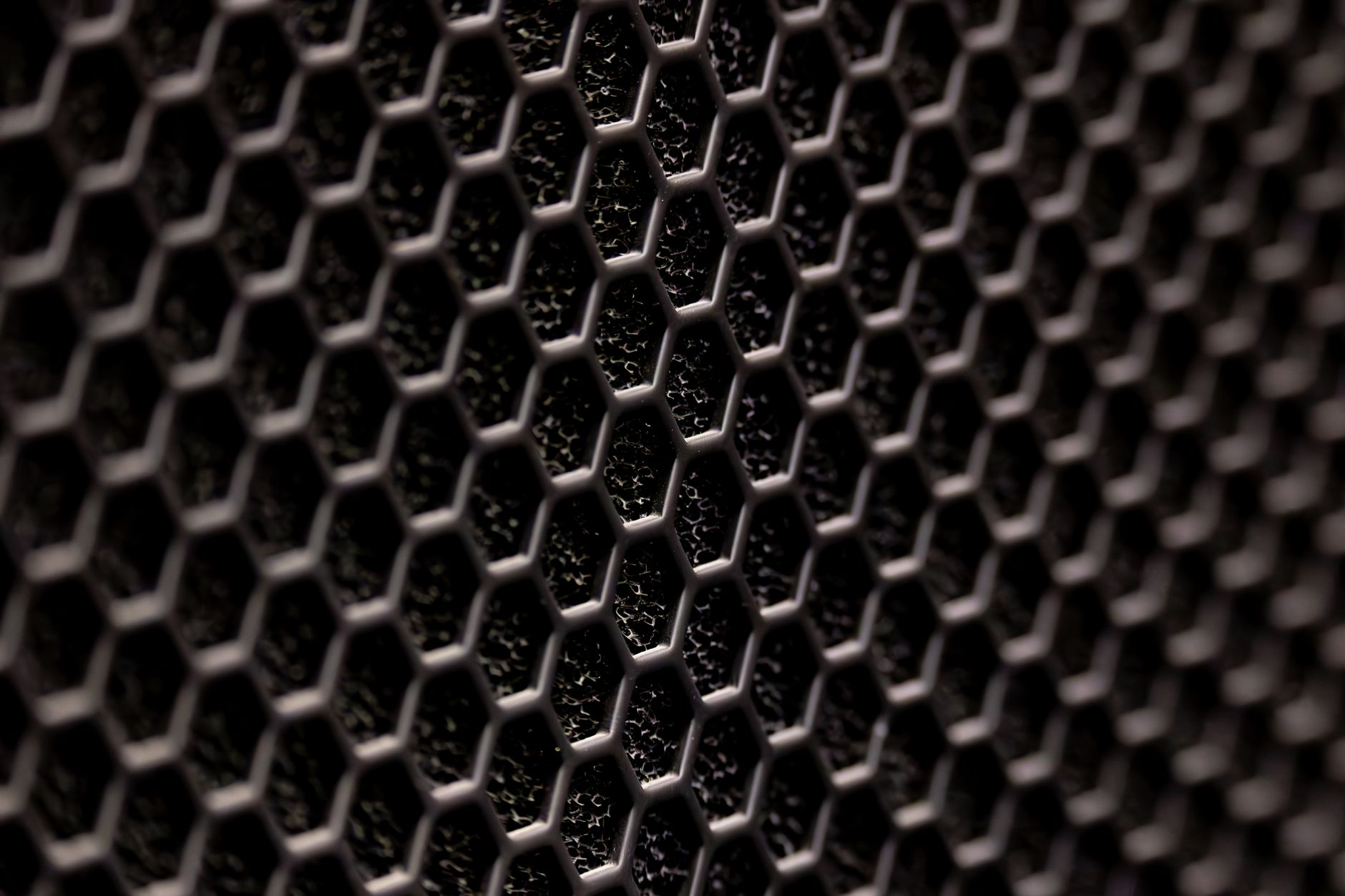
Photo by Sergei Starostin on Pexels
Marketing terms can make filter types confusing, but the internal mechanics are straightforward. A True HEPA filter is the gold standard for particulate matter, trapping 99.97% of airborne particles down to 0.3 microns. This includes dust mites, pollen, mold spores, and fine pet dander.
However, HEPA filters do nothing for chemical vapors, gases, or cooking smells. For those issues, you need an activated carbon filter. Carbon utilizes a porous structure to adsorb volatile organic compounds (VOCs) and household odors. Many modern units pair a washable pre-filter (like the one on the Levoit Vital 200S-P) to catch large debris like pet hair, extending the life of the primary HEPA layer.
Be cautious with ionic air purifiers or electrostatic precipitators that generate ozone as a byproduct of charging particles. Always check for the California Air Resources Board (CARB) certification to guarantee that any unit you purchase meets strict safety standards for ozone emissions.
What to Look For: Key Features Checklist
Evaluating specifications requires looking past aesthetic design to focus on performance and day-to-day livability. Keep this checklist handy while comparing models:
- CADR Ratings: Verify that the smoke CADR aligns with your calculated room size multiplied by 0.67.
- AHAM Verified & CARB Certified: Look for independent verification seals to ensure safety and performance claims are legitimate.
- Noise Levels: Check decibel ratings. A good bedroom unit should operate below 25 to 30 decibels on its lowest setting.
- Filter Replacement Indicators: Digital alerts or light indicators help you track when your filters actually need changing based on usage.
- Physical Pre-Filters: Washable external mesh screens save money by trapping large hair and dust before it clogs the expensive HEPA core.
Can a Single Air Purifier Clean Multiple Interconnected Rooms?
A common temptation is placing one massive commercial-grade air purifier in a central hallway and expecting it to purify an entire apartment or multi-room floor plan. In practice, interior walls, closed doors, and hallways act as severe bottlenecks for airflow. While a heavy-duty unit like the IQAir HealthPro Plus XE or a high-capacity model like the Smart Air Blast can manage large, open-concept shared spaces, they cannot easily force air around corners into separate bedrooms.
If your goal is whole-home purification, physics dictates that room-by-room containment works better. Closed doors completely block the directional airflow required for filtration. If you sleep with your bedroom door shut, that room will receive virtually zero benefit from a unit running in the living room. For multi-room setups, deploying smaller, efficient units in frequently occupied rooms yields cleaner air than relying on a single distant powerhouse.
Matching Air Purifiers to Specific Needs: Allergies, Pets, and Smoke
Different households face entirely different pollutant loads, which changes how you should prioritize your budget. If you suffer from severe seasonal allergies, a certified True HEPA filter is non-negotiable. It captures microscopic pollens before they trigger your symptoms.
Pet owners face a dual challenge: floating fur and stubborn dander odors. Units featuring specialized pet modes and washable pre-filters, such as the Levoit Vital 200S-P, make routine maintenance easier because you can vacuum or rinse the hair trap rather than replacing expensive components prematurely. Pair this with an activated carbon layer to manage pet-related smells.
Wildfire smoke or urban pollution requires maximum particulate performance. During smoke events, you need a high CADR rating and a tight seal around the filter housing to ensure air cannot bypass the media. Legacy models like the Winix 5500-2 were long praised for handling these tasks affordably, but current mid-range alternatives like the Blueair Blue Pure 311i Max provide modern alternatives for spaces up to 465 sq ft.
Noise Levels, Sleep Modes, and Light Pollution Considerations
An air purifier cannot help you if you turn it off out of frustration. Many units produce a gentle white noise on low settings, which many sleepers find comforting. However, running a lower-tier fan on high speed to compensate for an undersized unit creates a loud, disruptive drone.
This is why sizing up is essential for bedrooms. By purchasing a purifier rated for a larger space than your bedroom, you can run the device on its lowest or medium speed, keeping decibel levels low while still achieving adequate air changes through the night. Additionally, check for a dedicated sleep mode that dims or completely turns off bright digital displays and indicator lights, preventing unwanted light pollution in a dark room.
Hidden Costs: Replacement Filter Prices and Electricity Usage
The sticker price of an air purifier is only the entry fee. Over a span of several years, replacement filters often cost more than the initial device. True HEPA and carbon composite filters generally need replacement every 6 to 12 months depending on your local air quality and run time.
| Model Type / Tier | Initial Price Range | Annual Filter Cost | Best Suited For |
|---|---|---|---|
| Compact Value (e.g., Blue Pure Max series) | $100 - $230 | $30 - $50 | Small bedrooms, offices |
| Mid-Range Pet/Allergy (e.g., Levoit Vital 200S-P) | $150 - $200 | $40 - $60 | Living rooms, pet owners |
| Heavy-Duty Premium (e.g., IQAir HealthPro XE) | $900+ | $150 - $250 | Severe allergies, smoke, large spaces |
Electricity consumption is generally modest since most modern brushless DC motors draw minimal wattage on low speeds, often comparable to a standard LED light bulb. However, running an industrial-sized unit on high 24/7 will noticeably impact your monthly utility bill. Factor these ongoing maintenance and energy expenses into your budget before committing to a heavy-duty machine.
Smart Features Worth Paying For (And Which to Skip)
Modern air purifiers frequently include Wi-Fi connectivity, smartphone companion apps, voice assistant integration, and real-time particulate matter (PM2.5) digital readouts. While checking air quality metrics on your phone can be satisfying, evaluate whether these features genuinely improve air quality or just inflate the price.
Auto-mode is the one smart feature genuinely worth paying for. Units equipped with accurate particle sensors can dynamically ramp up fan speeds when smoke, dust, or cooking fumes spike, and scale back down to whisper-quiet levels once the air clears. Voice controls and complex app schedules are nice conveniences, but physical buttons and a reliable auto-sensor matter much more for daily practicality.
Pros
- Significantly reduces indoor allergens, dust, and pet dander
- High-CADR compact models deliver strong performance quietly
- Auto-modes adjust fan speeds based on real-time air quality
Cons
- Replacement filter costs add up significantly over time
- Manufacturer room size claims often assume loud maximum fan speeds
- Large units take up substantial floor space
Common Mistakes to Avoid
Shoppers frequently fall into predictable traps when upgrading their indoor air. Keep these missteps in mind to protect your investment:
- Trusting Box Specs Blindly: Relying on manufacturer marketing claims for room size instead of verifying the actual CADR rating and AHAM certifications.
- Exact-Fit Sizing: Buying an air purifier sized exactly for your room dimensions without accounting for high ceilings, open layouts, pets, or smoke.
- Max-Speed Bedroom Noise: Running undersized units constantly on high speeds in bedrooms, leading to excessive noise complaints.
- Ignoring Maintenance: Forgetting to factor in recurring replacement costs for HEPA and carbon filters when calculating your budget.
Bottom line For most homeowners and renters, a mid-range unit with a solid CADR rating, a True HEPA filter, and an auto-mode—such as the Levoit Vital 200S-P or Blueair Blue Pure 311i Max—strikes the best balance between performance, noise levels, and long-term filter costs. Skip ultra-expensive medical-grade systems unless you manage severe medical respiratory conditions, and avoid cheap non-certified units that lack verified filtration proof.
Related guide: How to Choose the Right Smart Water Leak Detector
Related guide: How to Choose the Right Ergonomic Vertical Mouse
Related guide: How to Choose the Right Air Fryer Capacity for Your Household
FAQ
What size air purifier do I need for a large bedroom?
Calculate your bedroom's square footage by multiplying length by width, then multiply that number by 0.67 to find your minimum required smoke CADR. For a standard 200-square-foot bedroom, look for a smoke CADR of at least 134, and size up if you have high ceilings or pets.
Do I really need a True HEPA filter?
Yes, if your primary concerns are dust, pollen, pet dander, and mold spores. True HEPA filters capture 99.97% of fine particles down to 0.3 microns. If you only care about heavy chemical odors or VOCs, an activated carbon filter is also mandatory.
How much do replacement filters cost per year?
Depending on the brand and tier of the air purifier, replacement filters typically range from $30 to $60 annually for standard mid-range units, while heavy-duty commercial models can cost $150 to $250 per year to maintain.
Are smart air purifiers worth the extra money?
Smart features like real-time air quality sensors and automatic fan adjustment are worth paying for because they optimize performance and energy use. Companion app notifications for filter changes are also helpful, though voice controls are largely a luxury.
Where is the best place to put an air purifier in a room?
Place your air purifier in an open area at least one to two feet away from walls, furniture, or heavy drapes to ensure unrestricted airflow. Position it close to the main source of pollution, such as near a pet bed or entryway.
Sources
Facts in this article were checked against these pages on October 31, 2026:
- Air Purifier Room Size Calculator Guide: What Size Air Purifier Do You – Sylvane (sylvane.com)
- How to Choose the Right Air Purifier for Your Home: A Buyer's Guide (solencostore.com)
- Calculate the Air Purifier Needed for Your Room Size - Field Controls (fieldcontrols.com)
- Calculate Room Size for Your Air Purifier | Air Health - Air Health (airhealth.com)
- Air Purifier Buying Guide - Consumer Reports (consumerreports.org)
- How to Choose the Right Room Air Purifier for You - Filtrete (filtrete.com)
How we researched this: this guide is based on current manufacturer information and reputable sources, listed in the Sources section above, and is updated when things change. Read our editorial policy.
Content Writter

Comments
No comments yet — be the first to share your thoughts.