
Bose QuietComfort Ultra vs. Sony WH-1000XM5: Which to Buy?
Deciding between Bose QuietComfort Ultra and Sony WH-1000XM5? We compare active noise cancellation, travel comfort, calls, and current value.
Quick answer: Choose the Bose QuietComfort Ultra if you prioritize class-leading low-frequency noise cancellation and compact, folding travel portability. Pick the Sony WH-1000XM5 if you want superior microphone quality, 30+ hours of battery life, and significantly better value at current retail prices.
Finding the right pair of flagship over-ear headphones usually comes down to two major names. For daily commuting, open-office work, and long-haul flights, both the Bose QuietComfort Ultra and the Sony WH-1000XM5 remain two of the most popular noise-canceling headsets available.
However, recent market shifts have changed the calculus. Sony released the successor WH-1000XM6, pushing the WH-1000XM5 into a heavily discounted price bracket, while Bose updated its flagship lineup with a 2nd Generation QC Ultra priced at $449.95. This comparison examines how the Bose QuietComfort Ultra lineup stacks up against the discounted Sony WH-1000XM5 across sound, comfort, active noise cancellation, and travel practicality.
Key takeaways
- Bose edges out Sony in raw low-frequency noise cancellation, making it better for plane engine roar.
- Sony provides noticeably clearer voice pickup during calls thanks to four beamforming microphones.
- The Bose earcups fold inward at the headband for a compact travel case, whereas the Sony earcups only rotate flat.
- Sony offers 30+ hours of battery life, easily outlasting Bose on single-charge endurance.
- The price gap has widened significantly, with the Sony WH-1000XM5 frequently selling between $279 and $328.
Noise Cancellation and Transparency in the Real World
Active noise cancellation (ANC) is the main reason shoppers look at both models. While both silence typical office chatter, they handle different sound frequencies in noticeably distinct ways.
The Bose QuietComfort Ultra holds the edge in overall noise reduction. It excels at tackling deep low-frequency sound, such as the persistent roar of jet engines or commuter train tracks, without generating noticeable background hiss. Bose also provides a natural passthrough mode when you need to hear announcements or carry on a conversation.
Sony relies on an Auto NC Optimizer system in the WH-1000XM5. This setup automatically adjusts noise cancellation based on atmospheric pressure and your surroundings. It handles unpredictable mid-range sounds effectively, but Bose remains the absolute benchmark for sheer silence during transit.
All-Day Comfort, Clamping Force, and Build Quality

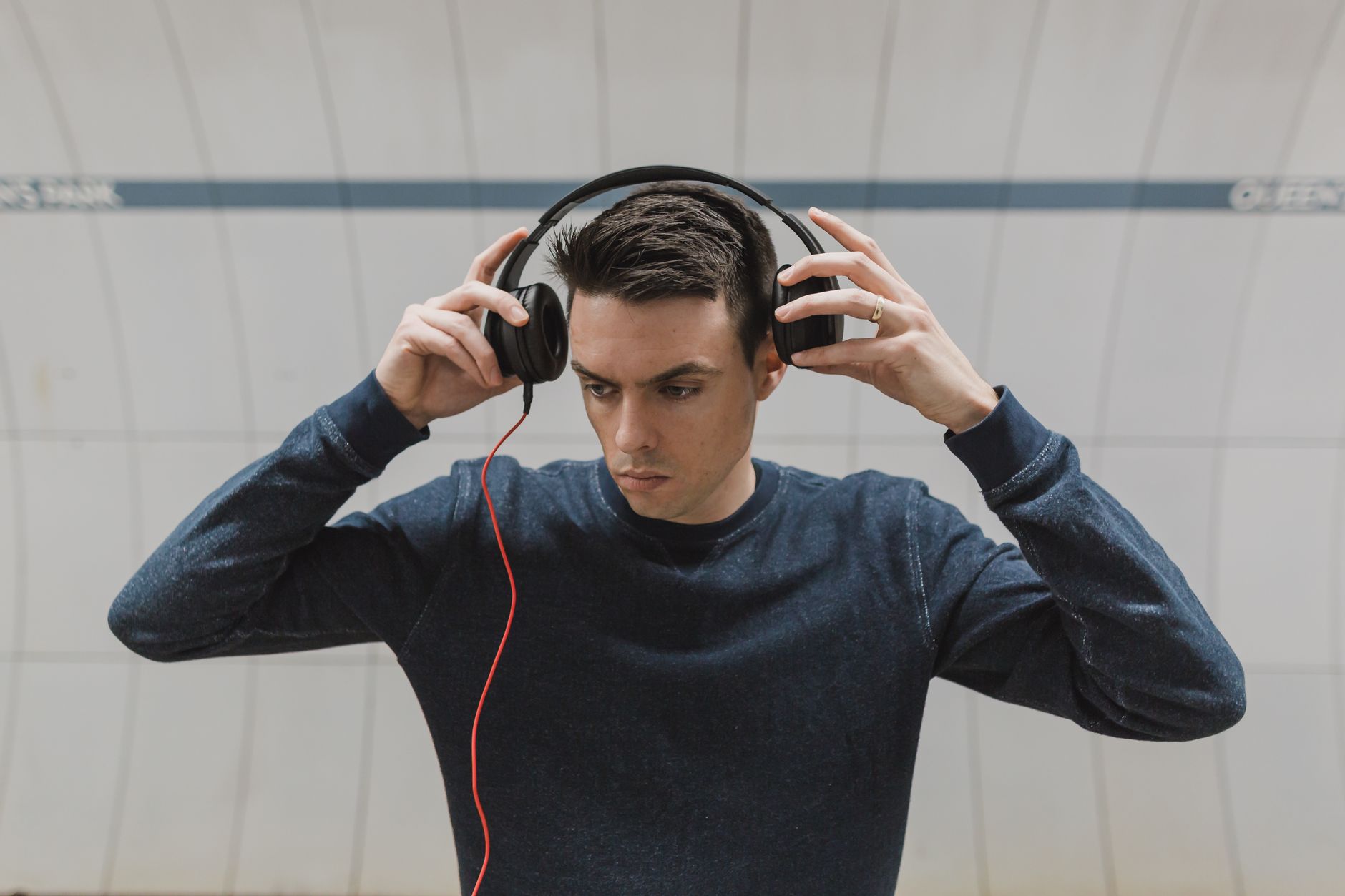
Photo by Plastic Lines on Pexels
Comfort during a multi-hour flight or full workday often matters more than raw technical performance. Both headsets rank among the most comfortable options available, but their weights and finishes differ.
Sony built the WH-1000XM5 with soft-touch materials and plush synthetic padding. It weighs 250g (tested around 246.1g), making it roughly 8.3g lighter than the Bose (tested at 254.4g). The clamping force is gentle, distributing pressure evenly across the crown of the head.
Bose utilizes sleek, polished materials that feel more premium to the touch. The ear cushions provide generous depth, keeping your ears from rubbing against the driver grilles. If you wear glasses, both models seal well without creating painful pressure points behind your ears.
Sound Profile, Spatial Audio, and App Customization
Straight out of the box, each pair arrives with a signature sound profile. You will want to use their companion mobile apps to adjust the sound, as neither headset achieves its full balance on default settings.
Bose presents a full-bodied, warmer sound with deep bass presence. For expanded staging, Bose includes proprietary Immersive Audio spatial processing, though listeners often find the effect somewhat unconvincing depending on the track. On compatible Android devices, Bose supports Snapdragon Sound and aptX Lossless.
The Sony WH-1000XM5 delivers greater sonic clarity and punchier mid and treble detail out of the box. Sony supports its proprietary high-resolution LDAC codec for Android users, alongside 360 Reality Audio spatial support. Keep in mind that neither LDAC nor aptX Lossless works over Bluetooth on an iPhone; both pairs fall back to standard AAC when connected to iOS devices.
Tip: Neither pair performs at its best on factory tuning. Open the Sony or Bose companion app right away to adjust the EQ sliders before judging audio quality.
Microphone Performance and Multipoint Connectivity
Clear voice pickup is critical if you plan to use your headphones for remote work and regular phone calls.
The Sony WH-1000XM5 wins clearly in call clarity. It features four beamforming microphones that isolate your voice from background clamor, making it noticeably better for Zoom meetings and phone conversations in noisy areas. Sony also includes handy touch automations, such as Quick Attention (covering the right ear cup to instantly mute audio and amplify outside sound) and Speak-to-Chat.
The Bose QuietComfort Ultra handles standard calls adequately, but background noise creeps through more readily in bustling environments. Additionally, the Bose QC Ultra cannot pass audio over a direct USB-C wired connection, which limits your wired listening options when working at a laptop.
Battery Life and Case Portability
Battery endurance and travel case footprint represent two of the clearest contrasts between these two headsets.
Sony dominates single-charge longevity with 30+ hours of continuous listening. Bose offers significantly lower continuous playback time by comparison, meaning frequent fliers will need to reach for a charging cable sooner.
When it comes time to pack your bag, Bose reverses the advantage. The Bose QC Ultra earcups fold completely inward at the hinges, allowing the headphones to slide into a slim, compact case. The Sony WH-1000XM5 earcups only swivel flat; they do not fold into the headband. As a result, Sony's case is substantially bulkier and takes up much more space in a personal item or backpack.
Warning: The Bose QC Ultra lacks an official IP water resistance rating. Keep both pairs protected from heavy rain and avoid using them for sweaty gym workouts.
Common Mistakes to Avoid
- Assuming the Sony XM5 folds like older models: Unlike the older WH-1000XM4, the XM5 cannot fold into its headband. Ensure you have adequate backpack room for its flat-laying case.
- Expecting high-res Bluetooth on iOS: Neither Sony's LDAC nor Bose's aptX Lossless functions on an iPhone, which limits both models to the AAC codec.
- Paying original list price for Sony: The WH-1000XM5 debuted at $399.99, but with the WH-1000XM6 on the market, you should expect to pay between $279 and $328 new, or roughly $200 to $253 for a renewed unit.
Comparison Summary: Specs and Key Differences
Here is how the key specifications and features compare side by side based on verified data:
| Feature | Bose QuietComfort Ultra | Sony WH-1000XM5 |
|---|---|---|
| Original Launch Price | $429 (Gen 2: $449–$449.95) | $399.99 (Now $279–$328 new) |
| Measured Weight | 254.4g | 246.1g (250g rated) |
| ANC Strength | Class-leading low-frequency reduction | Auto NC Optimizer system |
| Hinge Design | Folds inward at headband | Swivels flat only (no folding hinges) |
| High-Res Codecs | Snapdragon Sound, aptX Lossless | Sony LDAC (no aptX) |
| Battery Life | Lower single-charge endurance | 30+ hours |
| USB-C Audio Playback | No | No |
| Microphone Array | Standard integrated array | 4x beamforming microphones |
Bose QuietComfort Ultra Pros
- Superior low-frequency active noise cancellation
- Folds down small for easy packing
- Plush, luxurious materials and finish
- Natural ambient transparency mode
Bose QuietComfort Ultra Cons
- Significantly shorter battery life than Sony
- Cannot pass audio over a direct USB-C connection
- No official IP water resistance rating
- Priced at a premium ($449 for Gen 2)
Sony WH-1000XM5 Pros
- Excellent battery life reaching 30+ hours
- Exceptional voice clarity on phone calls
- Lightweight 250g frame with low clamping pressure
- Outstanding price-to-performance value ($279–$328)
Sony WH-1000XM5 Cons
- Does not fold inward, requiring a bulky travel case
- Slightly less low-rumble noise cancellation than Bose
- Lacks aptX codec support
The Verdict: Choose Bose or Sony?
Choosing between these two heavyweights comes down to travel dimensions, call demands, and your budget.
Bottom line: Choose the Bose QuietComfort Ultra if you are a frequent traveler who needs maximum noise cancellation against airplane engines and requires a compact case that folds away neatly. Choose the Sony WH-1000XM5 if you take lots of voice calls, want 30+ hours of battery life, and want top-tier performance at a discounted sub-$330 price point.
FAQ
Which has stronger active noise cancellation, Bose QC Ultra or Sony WH-1000XM5?
Bose edges out Sony in sheer noise cancellation power. It dampens deep low-frequency rumbles—such as jet engines and train tracks—more effectively without introducing audible background hiss.
Are Bose QuietComfort Ultra headphones more comfortable for long flights than the Sony XM5?
Both headphones offer excellent all-day comfort. Sony is roughly 8.3 grams lighter with gentle clamping pressure, while Bose offers plush padding and a refined fit that seals comfortably around ears of all sizes.
Do the Sony WH-1000XM5 fold up smaller than the Bose QC Ultra?
No. The Sony WH-1000XM5 earcups only swivel flat, resulting in a wider, bulkier travel case. The Bose QuietComfort Ultra folds inward at the headband hinges, fitting into a noticeably smaller footprint.
Which pair has better microphone quality for work calls and Zoom meetings?
The Sony WH-1000XM5 provides significantly better voice isolation. Its four beamforming microphones do a much better job separating your voice from surrounding ambient chatter during calls.
Is spatial audio on the Bose QC Ultra worth the extra cost over Sony?
Not necessarily. While Bose includes proprietary Immersive Audio, some listeners find the effect artificial. Sony offers its own spatial processing via 360 Reality Audio, making spatial sound an even matchup rather than a decisive advantage for Bose.
Sources
Facts in this article were checked against these pages on October 14, 2026:
- Bose QuietComfort Ultra vs Sony WH-1000XM5 (pocket-lint.com)
- Bose QuietComfort Ultra vs Sony WH-1000XM5: Which is Better? (recordingnow.com)
- Bose QuietComfort Ultra Headphones vs Sony WH-1000XM5: which is better? | What Hi-Fi? (whathifi.com)
- Bose QuietComfort Ultra vs. Sony WH-1000XM5: Tried and Tested (rollingstone.com)
- Bose QuietComfort Ultra Headphones vs Sony WH-1000XM5 - SoundGuys (soundguys.com)
- Bose QC Ultra (2nd Gen) vs Sony WH-1000XM5: Battle of the headphones (trustedreviews.com)
How we researched this: this guide is based on current manufacturer information and reputable sources, listed in the Sources section above, and is updated when things change. Read our editorial policy.
Content Writter




Comments
No comments yet — be the first to share your thoughts.